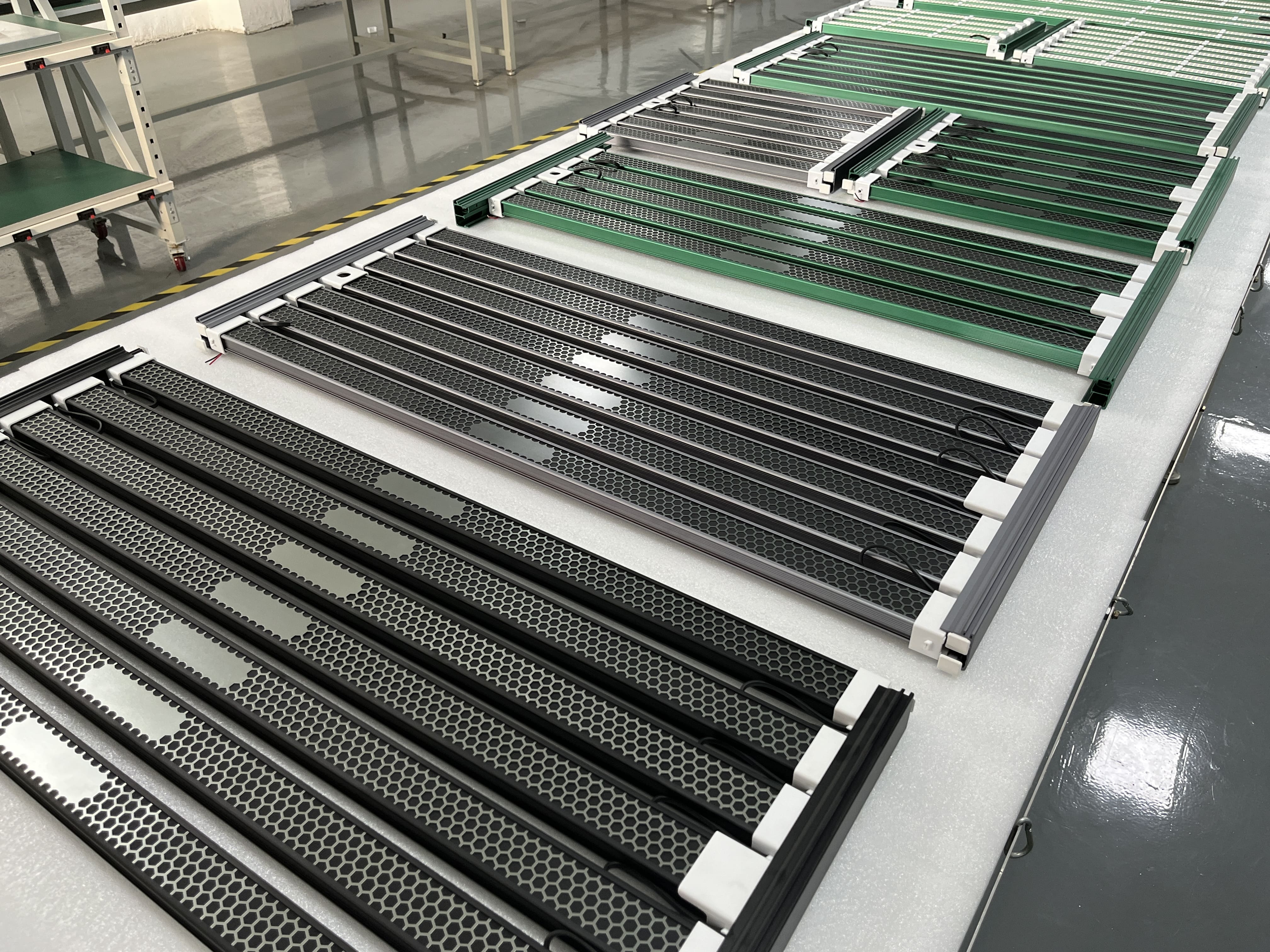
Plant Growth Lamps are artificial light sources that provide light to plants and promote their growth and development by emitting electromagnetic spectrum suitable for plant photosynthesis. It is usually used as a supplement or substitute for natural light and is widely used in indoor planting, greenhouse cultivation and other scenarios.
Features
Spectral tunability:
Plant growth lamps can provide light of specific wavelengths, such as red light (620-750nm) and blue light (400-500nm), which are essential for photosynthesis and growth cycle regulation of plants.
Some high-end growth lamps support spectrum adjustment, which can adjust the light ratio according to the different growth stages of plants (such as vegetative period, flowering period).
High efficiency and energy saving:
Plant growth lamps using LED technology have high energy efficiency and low power consumption. For example, the luminous efficiency of LED plant lamps can reach 100-200 lm/W, which is much higher than traditional high-pressure sodium lamps or fluorescent lamps.
Long service life, generally up to 50,000 hours or more, reducing replacement frequency and maintenance costs.
Low heat output:
LED plant lamps have low heat output, reducing the need for cooling systems, reducing energy consumption and operating costs.
Suitable for use in environments with limited space or temperature sensitivity, such as indoor planting racks or vertical farms.
Environmentally friendly and safe:
It does not contain harmful substances such as mercury, and waste disposal is more environmentally friendly.
Low voltage operation, high safety, suitable for home and commercial use.
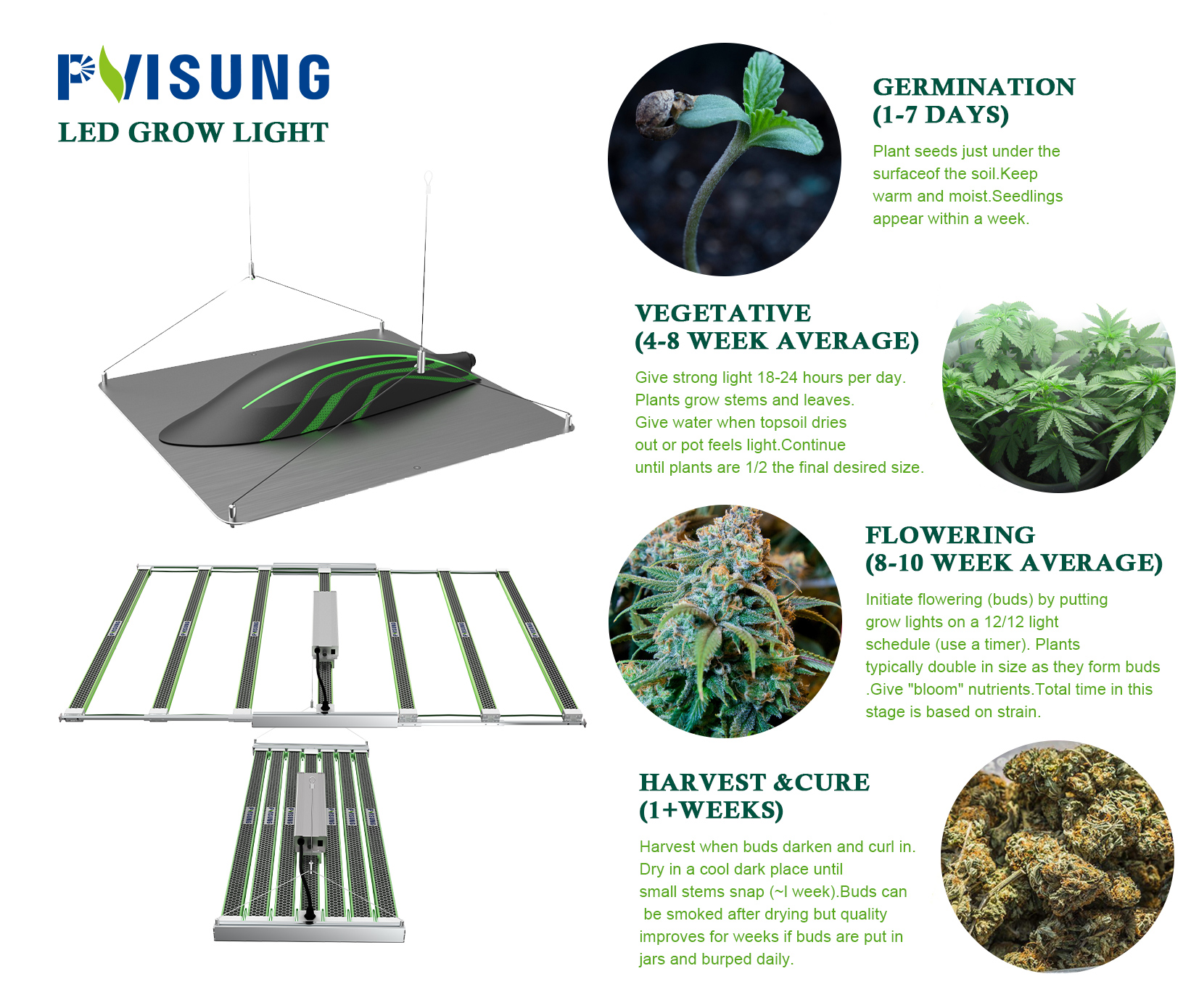
Application scenarios
Indoor planting:
In environments without natural light or insufficient light, such as homes and offices, plant growth lights can provide necessary light for indoor plants and promote their healthy growth.
Greenhouse cultivation:
In winter or rainy weather, the light intensity in the greenhouse may be insufficient. Plant growth lights can be used as a supplementary light source to extend the light time and increase crop yield and quality.
Vertical agriculture:
In multi-layer planting racks or vertical farms, plant growth lights can provide uniform light, ensuring that each layer of plants can get sufficient light, improving space utilization and yield.
Plant factory:
In a fully artificially controlled environment, plant growth lights are the main source of light, which can accurately control the light intensity, spectrum and light time to achieve efficient and high-yield plant production.
Scientific research experiments:
In the fields of plant physiology, genetics, and other scientific research, plant growth lamps can be used to simulate different lighting conditions and study the response mechanism of plants to light.
Maintenance
Regular cleaning:
Wipe the surface of the lamp with a soft dry cloth or special cleaner regularly to remove dust and stains to ensure light transmittance.
Avoid using corrosive cleaners or hard objects to scratch to avoid damaging the surface of the lamp.
Check the power supply and circuit:
Regularly check whether the power cord and socket are intact to avoid safety hazards caused by aging or damage.
Ensure that the lamp is well grounded to prevent electric shock accidents.
Adjust the light intensity and time:
According to the growth stage and needs of the plant, adjust the light intensity and time in time to avoid excessive or insufficient light.
Replace aging lamps:
When the brightness of the lamp decreases, flickers, or is damaged, it should be replaced in time to ensure the lighting effect.