

The core role of plant lights
Supplementary lighting
In winter or rainy weather, when natural light is insufficient, plant lights can extend the photosynthesis time of plants. For example, in strawberry planting, the use of plant lights can make the plants bloom and bear fruit early, and the picking period is extended.
Promote flowering and fruiting
By adjusting the spectrum and light intensity, plant lights can stimulate plants to bloom and bear fruit. For example, when planting ornamental flowers in a greenhouse, plant lights can increase the number of flowers and improve fruit yield and quality.
All-season planting support
Plant lights break seasonal restrictions and achieve year-round planting. For example, seedlings are cultivated in advance in spring, and light-loving plants are continued to be planted in autumn and winter to make full use of indoor space.
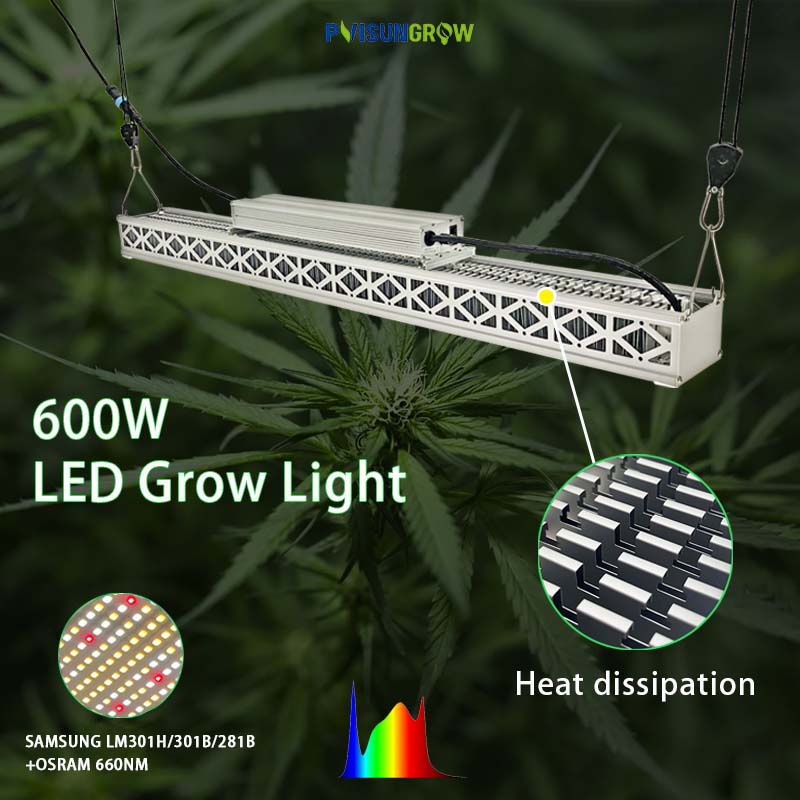
Working principle of plant lights
Plant lights simulate sunlight and stimulate plant growth by emitting electromagnetic spectrum suitable for photosynthesis. Plant photosynthesis mainly absorbs blue light (450-495nm) and red light (620-700nm), of which:
Blue light: accounts for about 20%-30%, promotes stem and leaf growth, and enhances photosynthesis efficiency.
Red light: accounts for about 40%-50%, promotes flowering and fruiting, and improves yield and quality.
Green light: accounts for about 10%-15%, penetrates leaves and promotes photosynthesis of lower leaves.
Ultraviolet and infrared: accounts for about 5%-10%, ultraviolet enhances disease resistance, and infrared regulates photoperiodic response.
Technical features with data
Wide spectrum range
Covers ultraviolet (280-400nm) to infrared (700-1000nm), providing full-spectrum lighting. For example, full-spectrum LED plant lights can emit red, green and blue light to simulate natural light.
High efficiency and energy saving
The light efficiency of LED plant lights can reach 2.5-3.0 μmol/J, which is much higher than traditional fluorescent lamps and sodium lamps. For example, the use of LED plant lights can increase the growth rate and photosynthesis rate of lettuce by more than 20%.
Low heat output
LED plant lights generate low heat during operation, which is suitable for multi-layer cultivation stereo combination systems, achieving low heat load and miniaturization of production space.
Adjustable spectrum
The spectrum ratio can be adjusted according to the growth stage of the plant. For example, the recommended PPFD is 150-250 μmol/m²/s in the seedling stage, 400-600 μmol/m²/s in the flowering stage, and 600-800 μmol/m²/s in the fruit ripening stage.
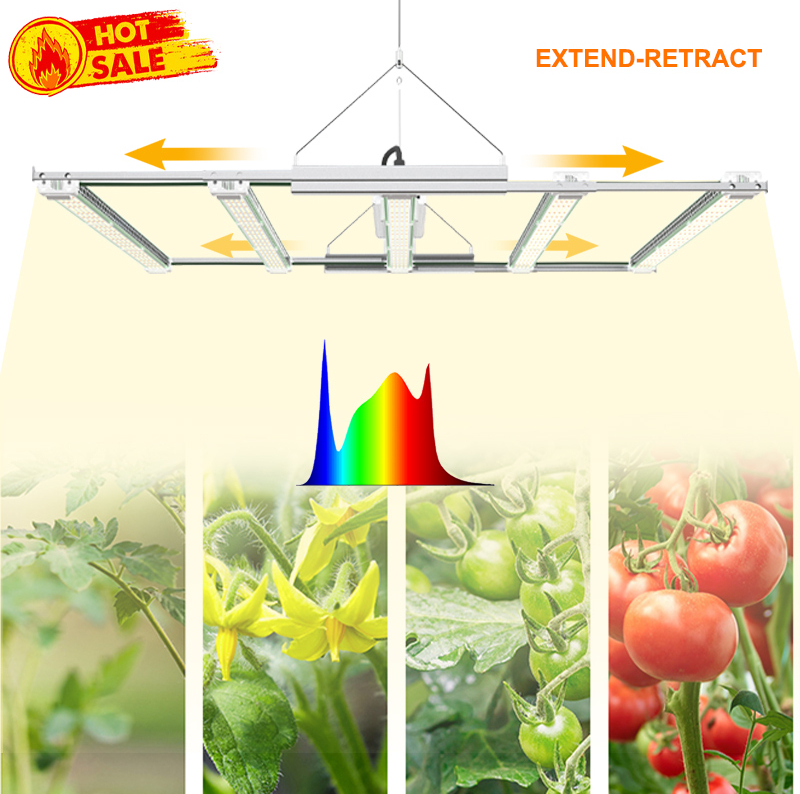
Advantages of plant lamps
Increase yield and quality
For example, when growing tomatoes in a greenhouse, the use of plant lamps can increase the sugar content of the fruit and shorten the ripening time.
Save space
Plant lamps can be installed in any position, such as windowsills, bookshelves or room corners, suitable for planting in small spaces.
Beautify the environment
Plant lamps not only help plants grow, but also add a natural atmosphere to the home or office environment.
Improve air quality
Plants absorb carbon dioxide and release oxygen during photosynthesis, which helps improve indoor air quality.
Application scenarios
Indoor garden
Provide stable light for flowers and green plants grown at home, so that plants are evergreen all year round.
Balcony planting
Solve the problem of limited balcony space and insufficient natural light, and turn the balcony into a small green world.
Office environment
Placing green plants in the office can relieve work pressure and improve work efficiency. Plant lights can provide light for office plants, allowing them to thrive indoors.
Commercial planting
In commercial planting scenarios such as greenhouses and plant factories, plant lights can increase crop yields and quality and achieve off-season planting. For example, using plant lights in winter greenhouses, eggplant and fruit vegetables can be put on the market around the Spring Festival.