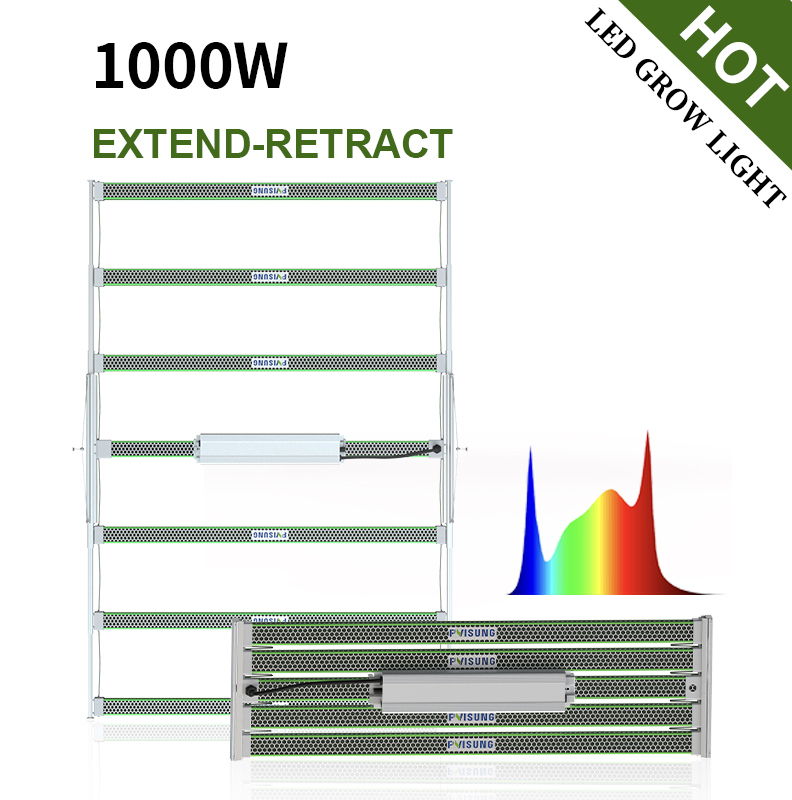
High PPFD (Photosynthetic Photon Flux Density) grow lights are designed specifically for plants with high light requirements. PPFD (unit: μmol/m²/s) represents the number of photosynthetically active photons received per second per unit area. These lights optimize the spectrum and light intensity to simulate the key wavelength range (400-700nm) found in natural sunlight, significantly improving photosynthetic efficiency.
1. Types
Full-spectrum: Covers the entire 400-700nm wavelength range, simulating natural sunlight and suitable for plant growth at various stages (e.g., seedlings and vegetative growth).
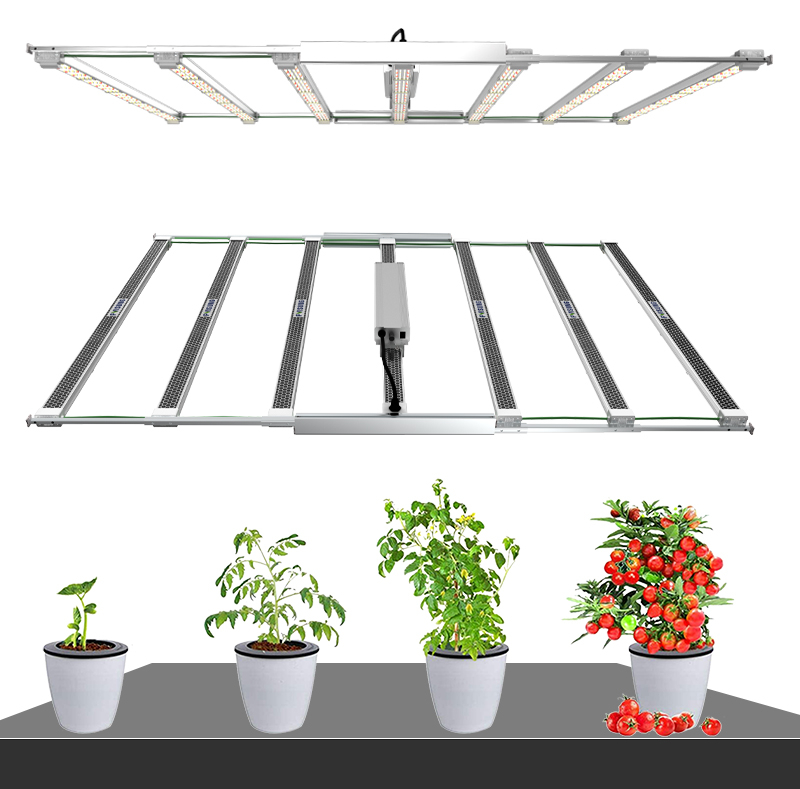
Red-blue combination: Primarily using 660nm red light and 450nm blue light, red light promotes flowering and fruiting, while blue light enhances leaf growth, making it suitable for fruit and vegetable crops (e.g., tomatoes and strawberries).
Adjustable spectrum: Dynamically adjusts the ratio of red and blue light through an intelligent control system to meet the needs of plants at different growth stages (e.g., increasing the proportion of red light during flowering).
2. Key Differences from Ordinary Grow Lights
High PPFD Lamps
PPFD Value: ≥800μmol/m²/s (some reach 1500μmol/m²/s)
Spectral Targeting: Precisely matches plant absorption peaks (e.g., red light at 660nm, blue light at 450nm)
Cooling Design: Liquid cooling/fin-type heat sink, supporting long-term, high-intensity operation
Energy Efficiency: PPE (Photosynthetic Photon Flux Efficiency) ≥2.5μmol/J
Ordinary Grow Lights
PPFD Value: 200-600μmol/m²/s
Spectral Targeting: Wide wavelength band, some photons go unused
Cooling Design: Basic cooling structure, suitable for low-intensity operation
Energy Efficiency: PPE ≤1.8μmol/J
Case Comparison:
In greenhouse tomato cultivation, using High Plants exposed to PPFD lamps (PPFD = 1000 μmol/m²/s) experience a 40% increase in fruit yield compared to plants exposed to conventional lamps (PPFD = 500 μmol/m²/s), and their vitamin C content increases by 15%.
The growth cycle of leafy vegetables (such as lettuce) is shortened to 25 days under High PPFD lamps (compared to 35 days under conventional lamps), and leaf thickness increases by 20%.
3. Material Features: A Balanced Approach to High-Temperature Resistance and High Light Efficiency
Chip Selection:
High-power LED chips (such as Cree XP-G3 and Osram Oslon Square) are used, each with a luminous flux exceeding 500 lm and supporting high current drive (over 1000 mA).
The chip packaging material is silicone + ceramic, with a temperature resistance of 150°C, far exceeding the 100°C of conventional LEDs.
Cooling System:
Liquid Cooling Pipes: Circulating coolant keeps the chip temperature below 60°C, extending the lifespan to 50,000 hours (compared to approximately 20,000 hours for conventional lamps). Finned Heat Sink: Made of 6063 aluminum alloy, it increases surface area by 300% and improves heat dissipation efficiency by 50%.
Optical Lens:
PMMA (polymethyl methacrylate) lenses are used, achieving a transmittance of ≥93%. A prism structure compresses the beam angle to 60°, minimizing light loss.
4. Advantages: Improved Efficiency and Quality
Shortened Growth Cycle:
Under High PPFD lamps, strawberries mature from flowering in just 30 days (compared to 45 days under natural light), and the sugar content of the fruit increases by 2-3° Brix.
Improved Space Utilization:
In vertical farming, shelf spacing can be shortened to 30cm (compared to 50cm under conventional lamps), increasing yield per unit area by 60%.
Energy Savings and Cost Reductions:
For a 1,000㎡ greenhouse, High PPFD lamps (PPE = 2.8μmol/J) consume 58% less annually than high-pressure sodium lamps (PPE = 1.2μmol/J), saving approximately 120,000 yuan in electricity bills.
5. Risks and Solutions of Excessive PPFD
Photoinhibition:
When PPFD exceeds 1500 μmol/m²/s, the plant's photosystem II (PSII) is damaged, leading to a decrease in photosynthetic rate (experiments show that photosynthetic efficiency in tomato leaves decreases by 30% when PPFD = 1800 μmol/m²/s).
Heat Stress:
When leaf temperatures exceed 35°C, transpiration intensifies, potentially triggering stomatal closure and impairing CO₂ absorption.
Solution:
Dynamic Dimming: A light sensor monitors PPFD in real time and automatically reduces light intensity (e.g., to 1000 μmol/m²/s at noon).
Intermittent Lighting: A "12-hour light + 2-hour dark" cycle is used to avoid continuous high light intensity.
6. Application Scenarios: From Commercial Cultivation to Scientific Research
Commercial Greenhouses:
Dutch tomato greenhouses use high PPFD lamps (PPFD = 1200 μmol/m²/s), achieving an annual yield of 70 kg/m² (compared to approximately 40 kg/m² in conventional greenhouses).
Vertical Farming:
Singapore's Sky Greens vertical farm uses tunable high-PPFD lighting, achieving an annual production of 20 crops of leafy vegetables (compared to approximately 10 crops on conventional farms).
Research:
In plant factories, the effects of light quality on plant secondary metabolites (such as anthocyanins) are studied by precisely controlling PPFD (e.g., 800 μmol/m²/s red light + 200 μmol/m²/s blue light).
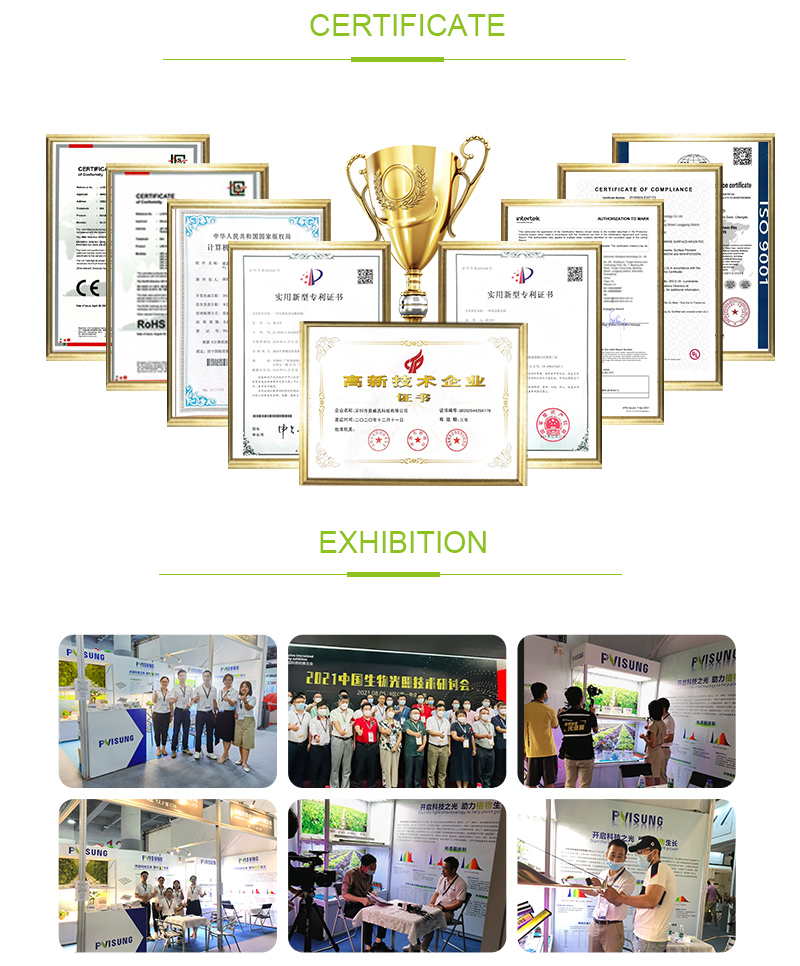
Shenzhen PvisonTechnology Co., Ltd., established in 2004, is a high-tech enterprise, innovator, and manufacturer engaged in the research, development, production, sales, and service of LED Grow Light. Professionally supply LED grow light products and provide high-efficiency LED grow light solutions.